The History of Film

Film had a slow beginning. In its very earliest days there were several people that began to pursue the idea of moving pictures. This research and inventing started as early as 1980s. Once the invention of the photograph came, it greatly helped to increase the movement of the motion picture industry.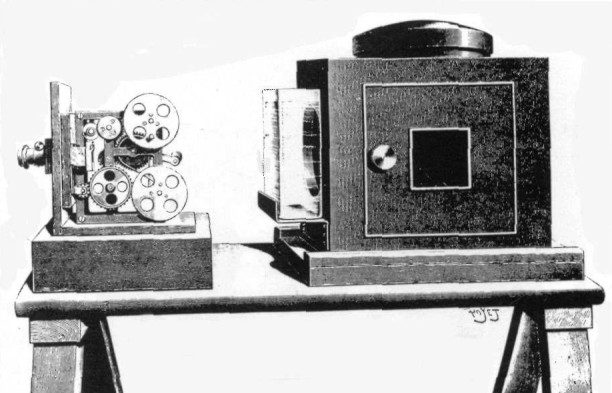
Thomas Edison invented a Kinetograph,
which was the first usable camera. It used a lamp that lit a moving loop of film that the spectator looked at through an eye piece. Kinetograph parlors started to spring up all over
Robert Paul and some of his colleagues were some of the first to hit on the projection of film. He and Birt Acres invented a camera and produced a short film of the
The earliest shows were usually only a minute long and showed a real life event, sporting event or slapstick comedy. Even though these were very short shows and not very creative, the idea of moving pictures was enough to start the engine of the industry.
In the beginning of this new media film makers began popping up all around the world. In  started making films of fantasy and the bizarre. He made the first film about space travel called, A Trip to the Moon (1902). He bent reality with his filmmaking and started much of the basic special effects used throughout the twentieth century.
Film editing and the creation of the shot as a film structure started with Edwin S. Porter. He worked with
Early films were only about fifteen minutes long. The audiences that watched these were mostly of the working class. As development advanced it became recognized more with the middle class as an art form, especially in 
At this point
Studios were created and became popular in
The greatest competitor of
This was the peak for silent films. At this point no sound technology had worked in synchronizing with the film, but this was soon to change. Filmmaking advanced rapidly with more mobile cameras and more versatile film.
In the late 1920s Warner Bros. Films started to add recorded sound effects and music to their films. They produced the first feature length film containing music and dialogue. This began the trend of talking pictures.
Sound now took over the film making industry and started a new era of movies. It moved quickly in the American industry, but slightly slower in other parts of the world. In  with the art of a live narrator.
Some say that talking movies saved
Now that sound was a major part of the movie industry it began to be creative. A new genre of musicals started.  The Broadway Melody (1929) was the first classical
In the forties American films were filled with patriotism and propaganda. This was because of World War II.
Fortunately for the film industry, television and film stayed far apart for many years. They were able to keep the creative elements of film distinct enough to keep people going to the theatres.
The latest advance in filmmaking is the digital era. Films are still created in a similar fashion with actual film, but they are being enhanced with digital technology. Sound and animation are most often digital and create a crisper, clearer movie going experience. Some films are even shot with digital film creating a different look than traditional methods. Old movies are also being enhanced with digital technology to improve the picture.
Film has taken quite a change since its first creation only a little more than a hundred years ago. As technology advances so does entertainment. The method in which film is recorded, produced and projected is different in almost every decade. The future will hold many new and better ways of creating movies.
posted by Heather @ 10:10 AM



0 Comments:
Post a Comment
<< Home